Logo
Get Estimate

Furnace Installation in Ohio done right the first time

New furnace installation in Ohio with upfront pricing and code-correct work


Furnace Installation in Ohio means sizing, permits, gas piping, venting, and startup done by a licensed crew, not a salesperson with a clipboard. We install Carrier, Trane, Lennox, Goodman, and Rheem systems for homeowners across the state, from 40-year-old houses with drafty ductwork to new builds that need a right-sized unit. If your old furnace is short cycling or blowing cold air, we can have heat back on fast.

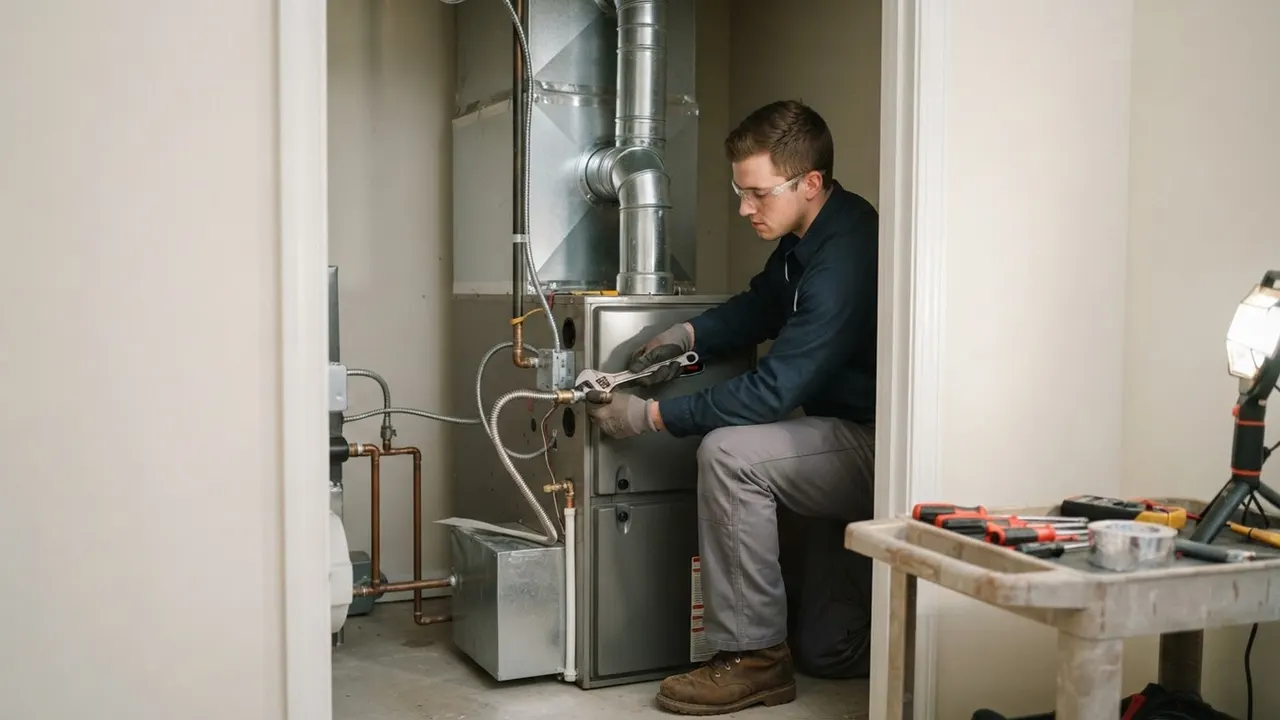
Furnace Installation in Ohio: furnace technician precisely connecting a new gas line and flue pipe to a newly installed
Licensed Licensed & Bonded
Fully Insured Insured & Bonded
24/7 Emergency Same-Day Response
Warranty Backed 24+ Years Trusted

What is included in a furnace installation

Every install we do covers the equipment, the labor, the permit, and the startup. Here is what is in the standard scope, and what we quote separately if your house needs it. We tell you upfront which category you are in before we schedule.

Manual J load calculation

We measure insulation, window area, ceiling height, and duct leakage to size the furnace correctly. This is the step most cheap installs skip, and it is the number one reason furnaces short cycle or leave rooms cold. You get the calculation in writing with your quote.
Equipment and haul-away

The new furnace, thermostat, and standard venting components are included, along with removal and disposal of the old unit. We recycle the old furnace and clean up the mechanical room before we leave. No extra charge for haul-away.

Permit and inspection

We pull the mechanical permit with your local jurisdiction and schedule the final inspection. You get the sign-off paperwork for your records and for resale. Skipping the permit is not an option on our jobs, even if a competitor offers it.

Gas line and venting verification

We pressure-test the gas line, verify pipe sizing to code, and check flue draft with a combustion analyzer on startup. If the existing venting does not meet code for a high-efficiency unit, we quote the PVC conversion as a separate line item before install day.

Startup and walkthrough

We verify temperature rise against the data plate, check static pressure, and confirm the thermostat holds setpoint. Then we walk you through the filter size, the warranty registration, and the shutoff procedure. You leave the walkthrough knowing how your new system works.

What Furnace Installation in Ohio actually involves


Furnace Installation in Ohio is the full replacement or first-time install of a gas, electric, or high-efficiency heating unit, including load calculation, duct evaluation, gas line work, venting, thermostat wiring, and commissioning. A proper install starts with a Manual J load calculation, not a guess based on square footage. We measure insulation, window area, ceiling height, and duct leakage before we quote a single unit. Then we pull local permits, set the new furnace on a level pad, seal the plenum with duct sealant, and run a combustion analyzer on the flue before we call the job done.

Ohio homes take a beating from November through March. Lake-effect wind off Lake Erie, older housing stock with undersized returns, and temperature swings that drop 30 degrees overnight all push a furnace harder than the same unit would work in a milder climate. If your system is 15 years or older, a new furnace installation Ohio homeowners can count on usually pays for itself in lower gas bills and fewer 2 a.m. no-heat calls. We also handle furnace replacement and installation Ohio-wide for rentals, small commercial spaces, and multi-unit buildings.

How our furnace installation process works

Five steps, no surprises. We tell you what happens, who shows up, and how long it takes before we start. Most single-family changeouts are done in one day.

01

Schedule

Call or book online — a real human picks up and confirms a 2-hour arrival window.

02

Diagnose

Licensed tech inspects on-site, then walks you through the cause and your options.

03

Fix

The job is completed to code and done right the first time — no shortcuts, no surprises.

04

Guarantee

Every job backed by a written workmanship warranty — and we stand behind it.

Tools and methods we use on every install

Tools & Equipment

Manifold gauge set

Used to check gas pressure at the valve and verify inlet and manifold pressure against the data plate. Wrong gas pressure is the number one cause of delayed ignition and premature heat exchanger failure.

Combustion analyzer

Measures flue gas oxygen, carbon monoxide, and temperature rise on startup. We use it on every gas furnace to confirm the unit is burning clean and drafting correctly before we leave.

Multimeter

Tests control board voltage, igniter resistance, and blower amp draw. A cheap multimeter misses intermittent faults that show up only when the furnace is hot.

Vacuum pump and refrigerant recovery machine

Needed when we tie a new furnace into an existing AC or heat pump system. We recover refrigerant to EPA standards, evacuate the line set, and recharge to the manufacturer's spec.

Inspection camera

Lets us look inside the heat exchanger and ductwork without cutting into the cabinet. We use it to confirm cracks, blockages, and debris before we quote a replacement.

Duct cleaning equipment

On older Ohio homes, we often pull 20+ years of dust and debris out of the ducts during a changeout. Clean ducts mean the new blower is not fighting restricted airflow from day one.

Torch kit and flaring tool

Used for brazing refrigerant lines and making clean flare connections on mini-split and heat pump installs. A bad flare leaks refrigerant and kills efficiency within a season.

Methods & Standards

Manual J load calculation

The industry-standard method for sizing heating equipment. We measure insulation values, window U-factors, ceiling height, and duct leakage, then run the numbers. It takes longer than a square-foot guess, but it is the only way to size a furnace correctly.

Static pressure testing

We measure total external static pressure on the blower to confirm the duct system can move the CFM the furnace needs. High static pressure means the blower works harder, runs hotter, and dies younger. We fix it before we hand over the keys.

Combustion analysis on startup

Every gas furnace we install gets a combustion test on the flue. We check CO levels, oxygen, and stack temperature against the manufacturer's spec. If the numbers are off, we adjust gas pressure or venting before we call the job complete.

Permit and code compliance

We pull the mechanical permit with your local jurisdiction and build to current Ohio code, including gas pipe sizing, flue termination clearances, and combustion air requirements. The final inspection sign-off goes in your file for resale.

When to schedule a furnace installation

01

Your furnace is 15-20 years old and has needed two or more repairs in the last three winters.

What we do: We inspect the heat exchanger, blower, and control board, then quote a replacement with the same-day repair cost credited toward the new unit. You get a written comparison of repair vs. replace so the decision is yours.

→ You stop paying for band-aid repairs and get a system with a 5-10 year parts warranty and lower monthly gas bills.

02

You are converting from electric baseboard or a heat pump to a gas furnace.

What we do: We run a new gas line to code, install the furnace, and tie it into your existing ductwork or help design new ductwork if none exists. We coordinate with your gas utility on the meter if needed.

→ A single gas furnace heats the whole house for less than baseboard ever did, with a thermostat you can actually program.

03

You just bought a house and the inspection flagged a cracked heat exchanger or a furnace past its service life.

What we do: We do a full inspection, document the issues with photos, and quote a replacement that meets current Ohio code. If closing is tight, we can schedule the install around your move-in date.

→ You move into a house with a safe, warrantied furnace instead of inheriting somebody else's problem on the first cold night.

04

Your current furnace is undersized and cannot keep up on the coldest nights of the year.

What we do: We run a Manual J load calculation, check duct sizing, and quote a correctly sized furnace. If the ductwork cannot handle the larger blower, we quote duct upgrades as a separate line item.

→ The house holds setpoint at 0 degrees outside, and the furnace runs in a steady low stage instead of screaming at full fire all night.

How Furnace Installation runs in Ohio

Ohio's heating season runs October through April, and the state's climate splits into three rough zones: the lake-effect belt near Lake Erie, the central plains, and the southern hills. A furnace that works fine in Cincinnati may struggle in Chardon, where wind chills hit -15 and snow piles up against the intake pipe. We size and spec each install to the local climate, not a one-size-fits-all chart. Building stock matters too. Ohio has a deep inventory of pre-1950 houses with knob-and-tube era ductwork, plus a wave of 1990s subdivisions with flex duct that has sagged and separated. Both need different solutions. We also deal with Ohio's permit patchwork: some jurisdictions require a mechanical permit and inspection on every changeout, others are lighter touch. We pull the permit either way, because code-correct work protects you at resale and keeps carbon monoxide risk off the table. If you are searching for professional furnace installation Ohio-wide, ask any contractor for the permit number before they start. If they hesitate, keep calling. Our crews run out of multiple hubs, so we cover the state without asking you to wait three days for a quote. Typical 2026 pricing for a standard 80% AFUE changeout in Ohio runs $3,200-$5,400, and a 96% two-stage system runs $5,800-$9,500 installed.

Neighborhoods We Serve

  • Lake Erie shoreline communities

    Wind-driven snow and ice can block high-efficiency intake and exhaust pipes. We spec concentric vent kits and elevated terminations on installs in these areas to keep the furnace running through lake-effect storms.

  • Older urban neighborhoods

    Pre-1950 homes often have undersized return air and gravity-era ductwork. We frequently quote duct upgrades alongside the furnace install so the new blower is not fighting a 75-year-old duct system.

  • 1990s-2000s subdivisions

    Flex duct in these homes sags and separates over time, cutting airflow to upstairs bedrooms. We inspect and reseal duct runs during the install so the new furnace actually delivers heat where it is needed.

  • Rural and small-town properties

    Propane and LP conversions are common outside the gas mains. We handle the orifice change, gas pressure setup, and venting spec for LP furnaces, and we verify the tank regulator is sized for the new unit.

Local Conditions We Plan For

  • Lake-effect snow and wind off Lake Erie

    High-efficiency furnaces pull combustion air from outside. In the snowbelt, intake pipes can ice over and shut the unit down. We install elevated or concentric terminations so the furnace keeps running through a January storm.

  • Wide temperature swings from November to March

    Ohio can swing 40 degrees in 24 hours. Two-stage and modulating furnaces handle those swings better than single-stage units, running low and steady instead of blasting on and off. We recommend two-stage for most Ohio homes.

  • Mixed housing stock from pre-1900 to new construction

    A 1,200-square-foot century home and a 3,000-square-foot new build need completely different equipment. We size every install with a Manual J load calculation so the furnace matches the house, not a rule of thumb.

  • Local permit and inspection variation

    Some Ohio jurisdictions require a mechanical permit and inspection on every changeout, others do not. We pull the permit regardless, because code-correct work protects you at resale and keeps the install safe.

22-year-old furnace replaced in Uniontown

Before

A 1990s single-stage 80% furnace was short cycling every 8 minutes and could not hold 68 degrees on a 10-degree night. Gas bills were running $240 in January. The heat exchanger showed surface rust and the blower was drawing above spec.

After

We installed a Trane two-stage 96% AFUE furnace with a new programmable thermostat and resealed the plenum. Temperature rise came in at spec, static pressure dropped from 0.9 to 0.55 inches of water column, and the January gas bill fell to $185.

Maintenance: Change the 16x25x4 filter every 90 days, schedule a fall tune-up, and keep the condensate drain clear. The unit is registered for a 10-year parts warranty.

Before

A 2,400-square-foot house had a 100,000 BTU furnace that could not heat the upstairs bedrooms above 62 degrees. The return air trunk was sized for a 60,000 BTU unit, and static pressure was running 1.1 inches of water column.

After

We installed a correctly sized 80,000 BTU two-stage Carrier furnace and added a second return air drop to the second floor. Upstairs bedrooms now hold 68 degrees, static pressure dropped to 0.6, and the blower is running at 60% of its rated amp draw.

Maintenance: Replace the filter monthly during heating season, keep furniture off the new return grille, and have the duct system checked every two years.

Before

A rental property was running on electric baseboard heat with winter bills over $500 a month. No ductwork existed. The tenant was using space heaters in two rooms because the baseboard could not keep up.

After

We ran a new gas line to code, installed a 96% Goodman furnace, and designed a compact duct system with six supply runs and two returns. First full winter gas bill came in at $165. Tenant stopped using space heaters entirely.

Maintenance: Annual fall tune-up, filter changes every 60 days, and a quick check of the condensate neutralizer each spring. The landlord now has a warrantied system instead of four separate baseboard zones.

Problems a new furnace installation in Ohio solves

Most homeowners call us because something is already wrong. Here are the four problems we see most often on Ohio furnace calls, and what a proper install does about them.

Problem

Furnace blowing cold air in the middle of winter

Usually a failed igniter, flame sensor, or gas valve. If the unit is 15+ years old, the repair bill often runs $400-$800 and the same part fails again next season.

Our Fix

We diagnose the exact failure first. If repair makes sense, we fix it. If the unit is past its service life, we quote a new furnace installation Ohio homeowners can trust, with the repair cost credited toward the new unit in many cases.

Problem

Furnace short cycling and uneven heating

An oversized furnace heats the house too fast, hits the limit switch, and shuts down. Rooms swing 5-8 degrees, the blower wears out early, and gas bills climb.

Our Fix

We run a Manual J load calculation and check static pressure. If the old unit was oversized, the new one gets sized correctly. If ductwork is the bottleneck, we quote duct sealing or a return air upgrade alongside the install.

Problem

Furnace leaking water or condensate issues

High-efficiency condensing furnaces produce condensate that can freeze in an unheated space or back up if the drain line clogs. Water on the floor leads to rust and eventually a cracked heat exchanger.

Our Fix

We route condensate lines to a proper drain with freeze protection, install a neutralizer where code requires it, and verify slope on startup. On new installs we plan the drain route before the unit goes in, not after.

Problem

Furnace making loud noises or pilot light issues

Banging, rumbling, or a pilot that will not stay lit usually points to delayed ignition, a dirty burner, or a failing gas valve. Left alone, these become safety issues.

Our Fix

We test gas pressure, clean or replace burners, and check the heat exchanger for cracks. If the unit is unsafe, we tag it out and quote replacement. Safety is non-negotiable on gas appliances.

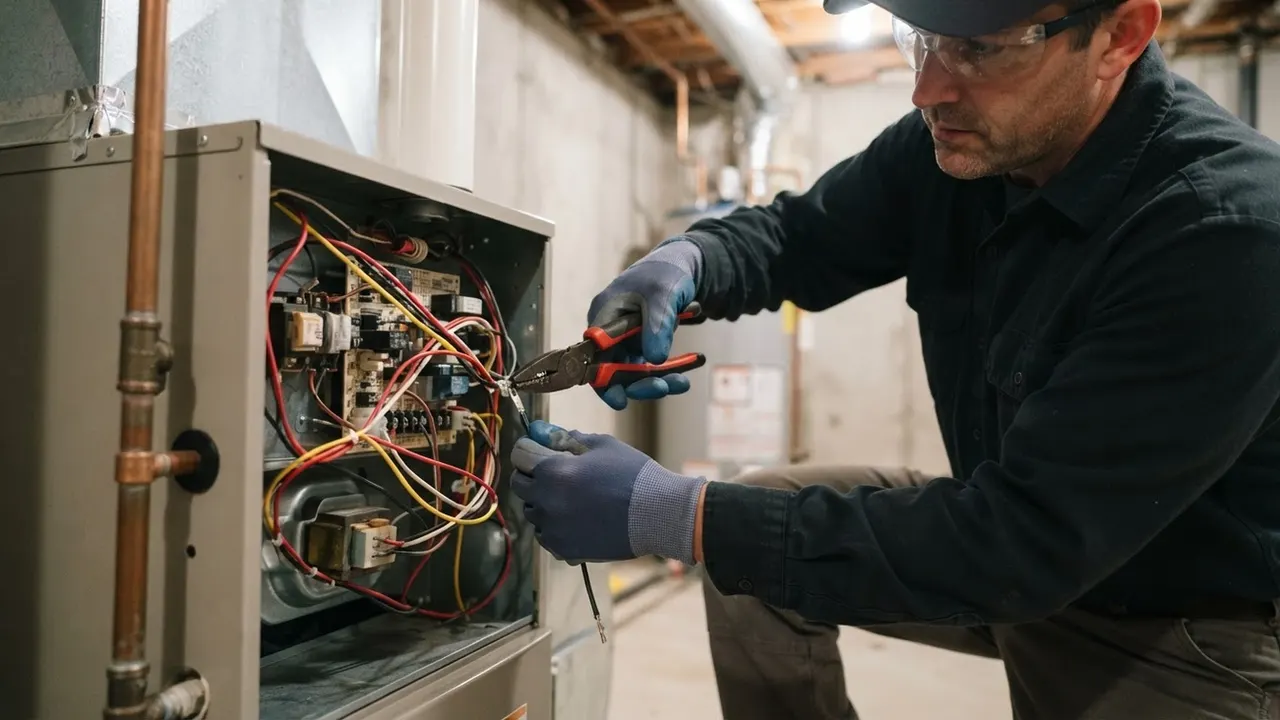
Furnace Repair in Ohio: detailed shot of a furnace technician's hands carefully making an electrical connection with

Why Ohio homeowners upgrade their furnace

A new furnace is not just a box in the basement. It is lower monthly bills, fewer emergency calls, and a house that actually holds temperature on the coldest night of the year. Here is what changes after a proper install.

  • Lower monthly gas bills

    A 96% AFUE two-stage furnace uses roughly 20-30% less gas than a 15-year-old 80% unit in the same house. On a typical Ohio winter bill of $180, that is $35-$55 back in your pocket every month, and more when January locks in below 10 degrees for a week straight.

  • Even heat room to room

    Most uneven heating complaints trace back to a mismatched furnace and duct system, not the thermostat. We size the blower and static pressure to your actual ductwork, so bedrooms over the garage stop running 6-8 degrees colder than the living room. That is the difference a correct residential furnace installation Ohio homeowners notice on day one.

  • Fewer emergency no-heat calls

    New igniters, flame sensors, gas valves, and circuit boards mean fewer mid-winter breakdowns. We also register the manufacturer warranty at install, so parts coverage runs 5-10 years depending on the brand. That beats paying $400-$900 out of pocket for a heat exchanger or blower motor on a furnace that is already on borrowed time.

  • Code-correct venting and gas work

    Ohio requires permits and inspection on furnace changeouts in most jurisdictions. We pull the permit, run new gas piping to current code, and verify flue draft with a combustion analyzer. That protects you at resale and keeps carbon monoxide risk off the table. Skipping permits to save $150 is a bad trade every time.

Licensed, certified, and warrantied

Licensed & Certified

  • NATE Certification — issued by North American Technician Excellence
  • EPA Section 608 Certification — issued by U.S. Environmental Protection Agency
  • OSHA Safety Certification — issued by Occupational Safety and Health Administration
  • State HVAC License — issued by State of Ohio
  • Local Mechanical Permit and Inspection — issued by Local Ohio jurisdictions

Verified Reviews

Google ★★★★★4.9

Quoted three options, no pressure, installed a Rheem two-stage in one day. They pulled the permit and the inspector signed off the next week. House is warmer and the gas bill is down. Would use again.

Google ★★★★★4.8

Our furnace died on a Friday night in January. They had a tech out Saturday morning, confirmed the heat exchanger was cracked, and installed a new Lennox on Monday. Fair price, clean work, no surprises.

BBB ★★★★★4.9

Used them for a rental property furnace replacement. They handled the permit, coordinated with the tenant, and sent photos of the finished work. Pricing matched the quote exactly. That is rare.

Yelp ★★★★★4.7

The tech actually measured the house instead of guessing. Turned out our old furnace was oversized and the return air was too small. They fixed both during the install. Upstairs is finally comfortable.

24 years installing furnaces across Ohio

Emergency Furnace Repair has been installing and servicing furnaces since 2002. That is 24 winters of Ohio no-heat calls, frozen condensate lines, cracked heat exchangers, and furnaces that somebody else sized wrong. Our techs hold NATE certification and EPA Section 608 certification, and every install follows Ohio mechanical code and local permit requirements. We work with Carrier, Trane, Lennox, Goodman, Rheem, York, Bryant, American Standard, Mitsubishi Electric, and Daikin, so we can match the right equipment to your house instead of pushing whatever is on the truck.

  • NATE-certified technicians on every install, not subcontractors
  • EPA Section 608 certification for refrigerant work on AC and heat pump combos
  • State HVAC license and local permits pulled on every changeout
  • Combustion analyzer used on every gas furnace startup to verify flue draft
  • 24 years and thousands of Ohio installs, from century homes to new construction
Get Started Today
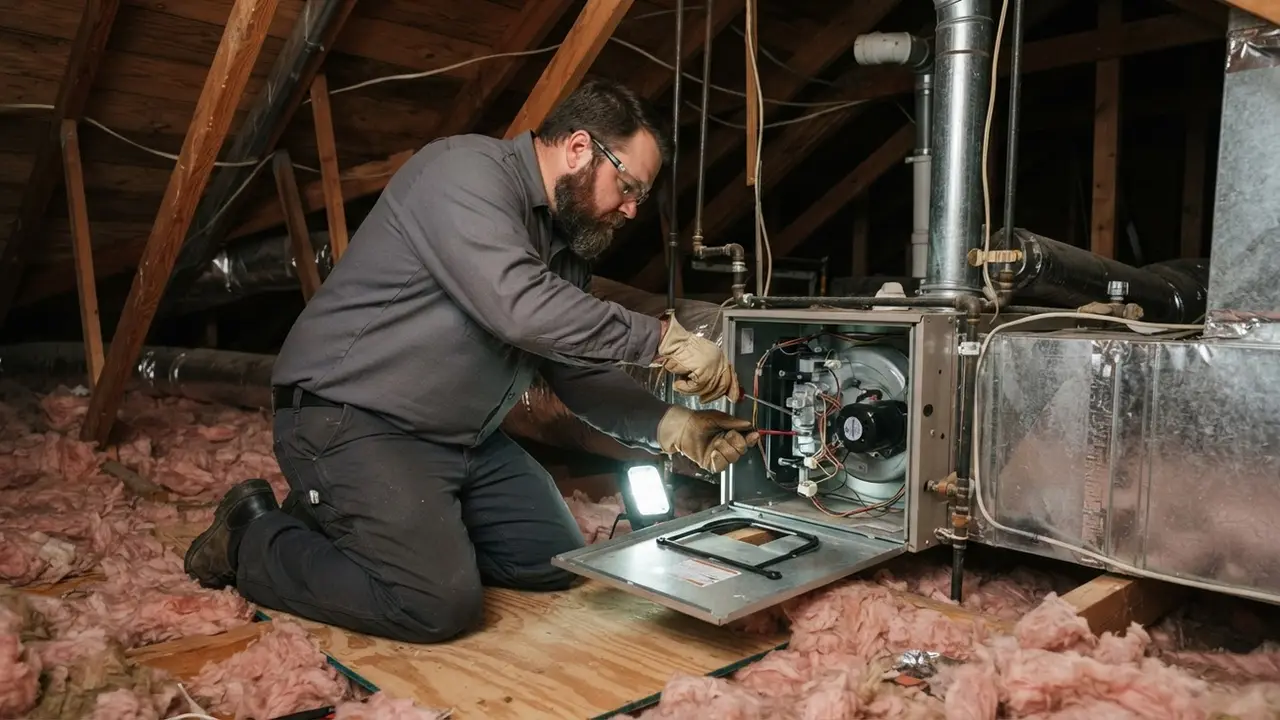
Furnace Repair in Ohio: wide shot of a furnace technician servicing a horizontal furnace unit in an attic space, surrounded

What Ohio homeowners say

Real experiences from customers who chose our Furnace Installation services.

“Our 22-year-old furnace finally quit in early January. Emergency Furnace Repair had a tech out the next morning, quoted us three options, and installed a Trane two-stage unit two days later. House holds temperature way better than before, and the gas bill dropped about $40 a month. No pressure, no upsell.”

D

Dave R.

Homeowner, Uniontown

“We had three quotes and these guys were the only ones who actually measured the house instead of eyeballing it. They found our return air was undersized and fixed it during the install. Bedrooms upstairs are finally warm. Install took one day and they cleaned up better than they found it.”

M

Melissa T.

Homeowner, Germantown

“I manage four rentals and have used these guys for two furnace replacements now. Permits pulled, inspections passed, tenants happy. They text me photos of the finished work and the permit sign-off. Pricing was fair and they did not tack on surprise charges. That is rare in this business.”

K

Ken W.

Landlord, Delphos

Frequently Asked Questions

Real answers to the questions we hear most often from local homeowners and property managers.

How much does furnace installation cost in Ohio?
Most Ohio homeowners pay $3,200 to $7,800 for a full furnace installation in 2026, including equipment, labor, permit, and standard venting. A basic 80% AFUE single-stage unit in a smaller house lands near the low end. A 96% two-stage or modulating system with new ductwork or a high-efficiency PVC flue runs $6,500 to $9,500. Add $400-$900 if we need to run a new gas line or replace the plenum.
How long does furnace installation take in Ohio?
A standard single-family changeout takes 6 to 9 hours, done in one day. If we are adding new ductwork, running a new gas line, or converting from electric to gas, plan on two days. High-efficiency condensing furnaces with new PVC intake and exhaust piping can push to a day and a half. We give you a realistic window before we schedule, not a best-case guess.
What size furnace do I need for my Ohio home?
Sizing comes from a Manual J load calculation, not square footage alone. A 1,800-square-foot Ohio house with average insulation and windows typically lands between 60,000 and 80,000 BTU. Older homes with poor insulation, big west-facing glass, or a finished basement can need 100,000 BTU or more. Oversizing causes short cycling, uneven heat, and premature blower failure, so we measure before we quote.
Are there rebates for furnace installation in Ohio?
Yes. High-efficiency gas furnaces at 95% AFUE or higher often qualify for federal tax credits under the 25C program, plus utility rebates through Ohio's gas providers. Typical combined savings run $300 to $1,200 depending on the unit and your utility. We hand you the paperwork at install and walk you through what to file. Rebates change year to year, so we confirm current amounts at quote time.

Related Services

Furnace Not Heating Repair

If your furnace is running but not heating, we diagnose igniters, flame sensors, gas valves, and circuit boards the same day. Many no-heat calls end in a repair, not a replacement, and we tell you honestly which one makes more sense for your unit's age.

View Furnace Not Heating Repair

Emergency Furnace Repair

No heat at 2 a.m. in January is an emergency. We run 24/7 dispatch across Ohio for furnace blowing cold air, pilot light issues, and total shutdowns. If the unit is beyond repair, we can quote a new furnace installation the next morning.

View Emergency Furnace Repair

Furnace Replacement

When repair costs pass half the price of a new unit, replacement is the smarter money. We handle the full changeout, including permit, haul-away, gas line verification, and thermostat setup. Most replacements are done in a single day.

View Furnace Replacement

Furnace Maintenance

Annual maintenance keeps your new furnace under warranty and catches small problems before they become no-heat calls. We clean burners, check the heat exchanger, test the igniter, and replace filters. Twice-a-year service is ideal for Ohio's long heating season.

View Furnace Maintenance

Furnace Tune-Up

A tune-up is the 60-90 minute version of maintenance: combustion analysis, blower amp draw, filter change, and thermostat calibration. It is the cheapest way to protect a new install and keep efficiency ratings honest. We recommend one every fall before the first cold snap.

View Furnace Tune-Up

Furnace Inspection

Buying a house in Ohio? A furnace inspection covers heat exchanger integrity, flue draft, gas leaks, and carbon monoxide risk. You get a written report with photos and a remaining-life estimate. It is the cheapest insurance against inheriting somebody else's problem.

View Furnace Inspection

Get your Furnace Installation in Ohio scheduled this week

Call now and we will get a licensed tech to your door for a written quote, usually within 48 hours. Upfront pricing, permits pulled, and a workmanship warranty on every install. If your furnace is dead, tell us and we will move you up the list.

Call Now Get a Free Quote

Contact Our Ohio Team

Call us any hour, any day. Our dispatchers answer live, give you a realistic arrival window, and route the closest truck to your address. If you prefer, send an email and we will reply the same business day with scheduling options.

Or call us right now at +16149260837 — we answer.

Emergency Furnace Repair


  • Phone

    +16149260837
  • Address

    875 Freeway Dr N, Columbus, OH 43229

  • Hours

    Mon–Fri: 7AM – 7PM
    Sat: 8AM – 4PM
    Sun: Emergency Only
    24/7 Emergency Available

Call +16149260837 Get Quote
Call Quote