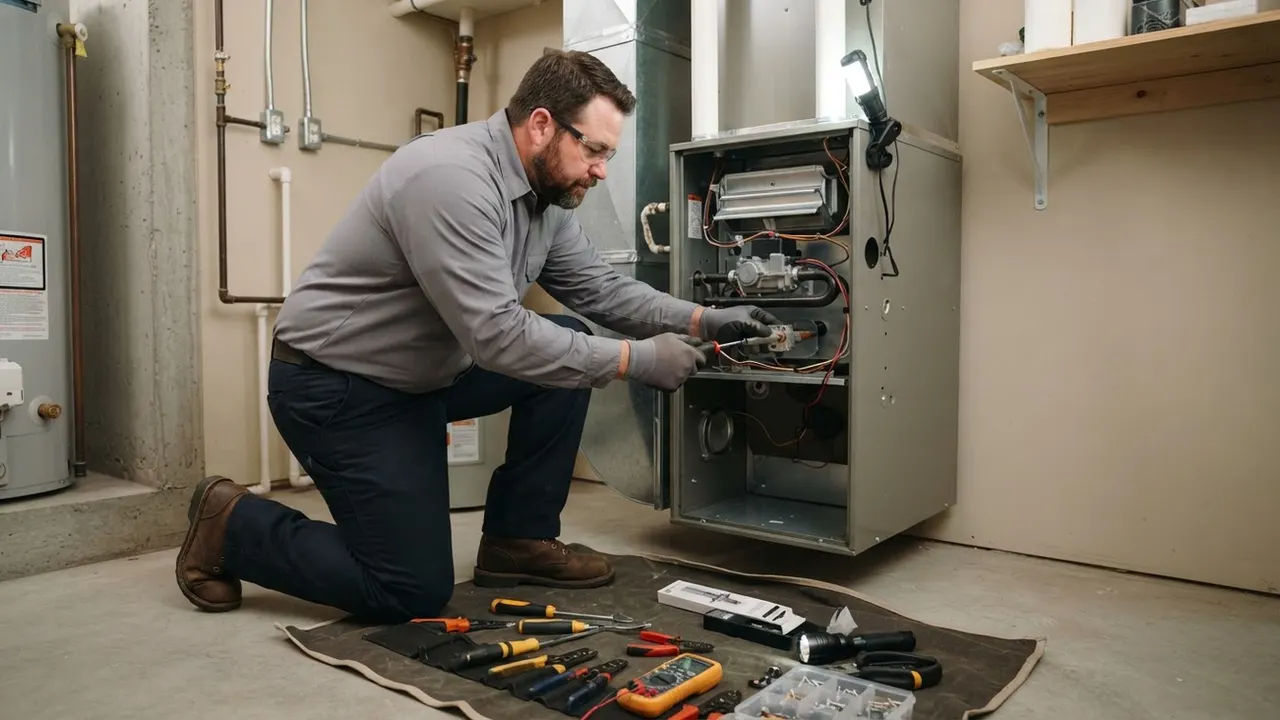
Full ignition diagnostic
Thermostat signal, inducer motor, pressure switch, igniter, gas valve, flame sensor, and blower are all tested in sequence with a multimeter. You get a straight answer on which component failed and why.
Every emergency call includes a full diagnostic, a written price before work begins, and a post-repair test of the system under real load. Parts are quoted separately from labor, and we tell you which repairs are urgent versus which can wait for a scheduled visit.
Thermostat signal, inducer motor, pressure switch, igniter, gas valve, flame sensor, and blower are all tested in sequence with a multimeter. You get a straight answer on which component failed and why.
On gas systems we run a combustion analyzer and check for carbon monoxide at the supply plenum and in the room. If the heat exchanger or flue is compromised, we shut the unit down and tell you before anything else.
Igniters, flame sensors, capacitors, gas valves, circuit boards, and blower components are stocked on the truck for Carrier, Trane, Lennox, Goodman, Rheem, York, Bryant, and American Standard systems.
After the repair we run two full heat cycles and measure supply and return temperatures. If the rise is outside the manufacturer's spec, we adjust gas pressure or airflow until it is right.
We pull the filter, check the return for restrictions, and note the correct size on your invoice. A clogged filter is the single most common cause of repeat limit-switch trips, and it costs nothing to catch.
Emergency Furnace Repair in Ohio is a same-day diagnostic and repair service for heating systems that have stopped producing heat, are blowing cold air, or have shut down on a safety fault. A tech arrives with a manifold gauge set, multimeter, and combustion analyzer, then works through the system in order: thermostat call, ignition, gas valve, flame sensor, blower, and heat exchanger. Most no-heat calls trace back to a failed igniter, a dirty flame sensor, a bad capacitor, or a tripped limit switch.
Ohio winters do not give a furnace room to fail politely. A January cold snap can push overnight lows into the single digits, and a house that drops below 55 degrees risks frozen pipes within hours. That is why we treat every no-heat call as urgent furnace repair Ohio homeowners cannot wait on until Monday. Whether you search emergency furnace repair in Ohio near me at midnight or at 6 a.m. before work, we answer and dispatch.
From the first ring to the final temperature check, here is exactly how an emergency furnace call runs with our team.
Schedule
Call or book online — a real human picks up and confirms a 2-hour arrival window.
Diagnose
Licensed tech inspects on-site, then walks you through the cause and your options.
Fix
The job is completed to code and done right the first time — no shortcuts, no surprises.
Guarantee
Every job backed by a written workmanship warranty — and we stand behind it.
Manifold gauge set
Reads gas pressure at the valve and verifies inlet and manifold pressure against the manufacturer's spec before and after a repair.
Multimeter
Tests thermostat signal, igniter resistance, flame sensor microamps, capacitor microfarads, and board voltage through the full ignition sequence.
Combustion analyzer
Measures CO, CO2, and flue temperature on gas systems to confirm safe combustion and catch a failing heat exchanger before it becomes a hazard.
Inspection camera
Slides into the heat exchanger and flue to look for cracks, soot, and blockages that are invisible from the burn chamber.
Vacuum pump and recovery machine
Used on heat pump and dual-fuel systems paired with a furnace, where refrigerant-side work is part of the heating call.
Duct cleaning equipment
Pulls debris and construction dust out of returns when airflow problems are contributing to limit trips and uneven heating.
NATE-certified diagnostics
Every tech works from the same ignition-sequence checklist, so a no-heat call in Campbell gets the same thorough test as one in Milford. Certification is not a badge on a website; it is the reason the diagnosis holds up.
EPA Section 608 compliance
Refrigerant handling and combustion work follow EPA Section 608 rules. We do not vent refrigerant, and we document what we recover on dual-fuel and heat pump jobs.
OSHA safety standards
Gas appliance work means CO risk, so we follow OSHA safety standards on every call: ventilation checks, gas leak detection, and a hard stop if the heat exchanger or flue is compromised.
Temperature-rise verification
After any repair we measure supply and return air and compare the rise to the data plate. If it is off, we adjust gas pressure or airflow until the system is running in spec, not just running.
01
What we do: We dispatch the closest stocked truck, diagnose the ignition fault, and repair on site. Igniters and flame sensors are the usual culprits after a summer of sitting idle.
→ Heat restored the same night, typically within two to three hours of your call.
02
What we do: We check for frozen condensate lines, tripped limits, and failed boards, then thaw, repair, and test the system through two full cycles before leaving.
→ The house is back to temperature the same evening, with the freeze risk to your pipes removed.
03
What we do: We measure temperature rise and static pressure, check the filter and return, and test the blower. Often the fix is airflow, not a new furnace.
→ Even heating across the house and shorter run times, usually without replacing the unit.
04
What we do: We dispatch, repair, and provide an invoice with the diagnosis, parts, and temperature-rise readings so the repair is on record.
→ Tenant heat restored the same day, with paperwork the owner can file.
Ohio heating season runs long and uneven. Lake-effect towns like Chesterland and Geneva see wet, heavy snow and wind-driven cold that pushes furnaces hard from November through March, while southern Ohio towns like Saint Clairsville and Belpre get shorter but sharper cold snaps that catch systems mid-season. Building stock matters too: 1950s ranches with undersized returns, century homes with original ductwork, and newer subdivisions with high-efficiency condensing furnaces that drain condensate and freeze at the trap when the flue runs long. We size the diagnostic to the house, not just the model number. If you need after hours furnace repair Ohio-wide, call and we will route the closest stocked truck and give you a real arrival window.
Downtown Saint Clairsville
Older homes near the courthouse often have original ductwork and gravity-era returns, so airflow checks matter as much as the ignition test.
Brookville
A mix of post-war ranches and newer builds. The ranches tend to have undersized returns, which shows up as limit-switch trips on cold nights.
Milford
Two-story homes with long duct runs and zoned systems. Uneven heating calls here usually trace to damper or blower issues, not the furnace itself.
Chesterland
Lake-effect snow belt. Furnaces run hard and long, and we see more inducer and pressure-switch failures here than anywhere else we serve.
Campbell
Dense older housing with a lot of gas furnaces in basements. Venting and flue draft checks are a standard part of every call in this area.
Single-digit cold snaps in January and February
Furnaces run near-continuous, which exposes weak capacitors, worn igniters, and dirty flame sensors that were fine in milder weather.
Lake-effect snow and wind in northeast Ohio
Snow can block intake and exhaust terminations on high-efficiency furnaces, causing pressure-switch faults and lockouts that look like board failures.
Freezing condensate lines on condensing furnaces
A frozen trap or drain line shuts the furnace down entirely. We thaw, clear, and re-pitch the line so it does not repeat next cold snap.
Older housing stock with original ductwork
Restricted returns and undersized ducts cause high-limit trips and short cycling, so we measure static pressure, not just the furnace.
Most no-heat calls fall into a handful of failure modes. Knowing which one you have tells us what to load on the truck before we leave the shop.
Problem
The house loses heat fast, and pipes in exterior walls can freeze within a few hours once indoor temps drop below 55 degrees.
Our Fix
We check the breaker, furnace switch, thermostat batteries, and door safety switch first, then walk the ignition sequence. Most no-start calls are a failed igniter, a tripped limit, or a bad pressure switch, all of which we carry.
Problem
The blower runs but the burners never light, so the system is circulating cold air and running up your electric bill for nothing.
Our Fix
This is usually a dirty flame sensor, a failed igniter, or a gas valve that is not opening. We test gas pressure and flame signal, clean or replace the sensor, and confirm the burners light on the first call.
Problem
Repeated on-off cycles wear out the igniter, inducer, and board, and they leave rooms unevenly heated while the system never reaches setpoint.
Our Fix
Short cycling usually traces to a restricted filter, an oversized unit, or a failing high-limit switch. We measure temperature rise and static pressure, then fix the airflow or replace the limit so the furnace runs full cycles again.
Problem
Water on the floor around a high-efficiency furnace rusts the cabinet, damages the floor, and can trip the unit offline entirely.
Our Fix
A clogged condensate trap or a frozen drain line is the usual cause. We clear the line, check the trap and drain pan, and verify the flue is pitched correctly so the water goes where it should.
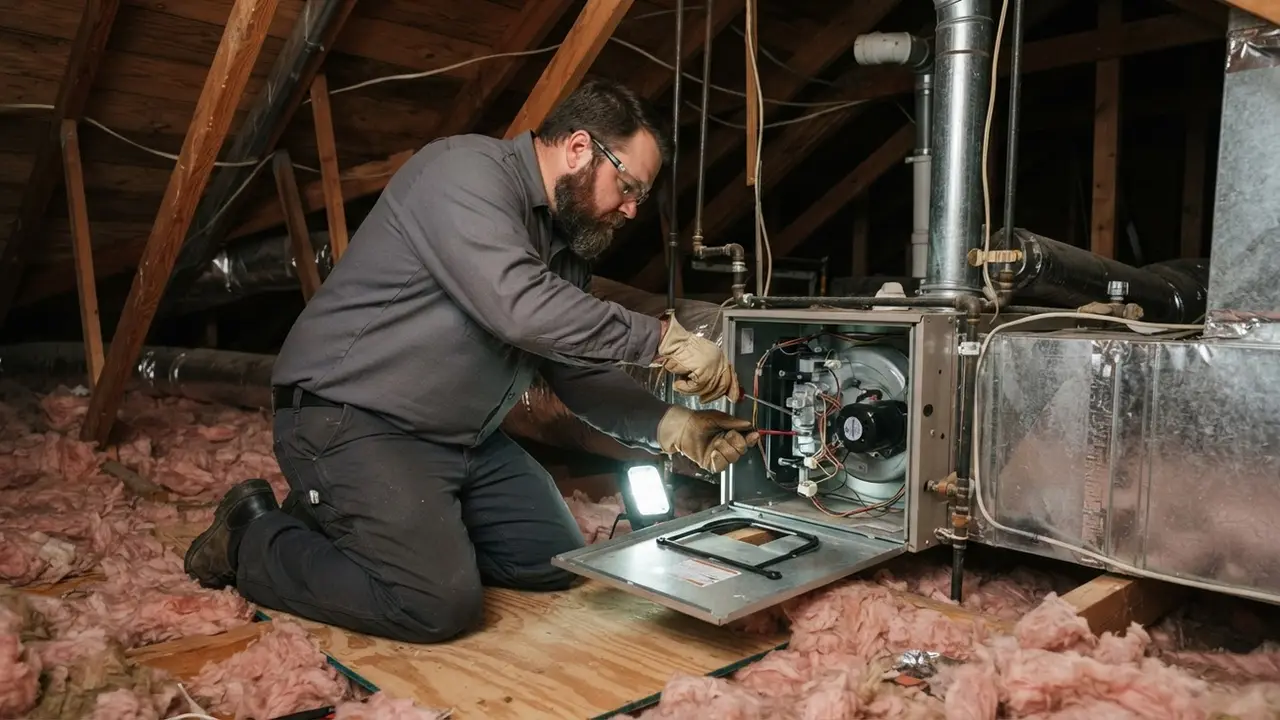
A dead furnace is a countdown, not an inconvenience. These are the four things that matter most when you are the one standing in a cold hallway at midnight.
Heat back same day
We hold same-day furnace repair Ohio slots open every day for no-heat calls, including weekends. Most igniter, flame sensor, and capacitor failures are fixed in a single 90-minute visit because our trucks carry the parts those jobs need.
Techs who diagnose, not guess
Every tech carries a combustion analyzer and multimeter and tests the full ignition sequence before quoting a repair. That means you pay for the failed component, not a parts-swap experiment that leaves the real fault in place.
Brands we know cold
Carrier, Trane, Lennox, Goodman, Rheem, York, Bryant, American Standard, Mitsubishi Electric, and Daikin systems are all in our regular rotation. We stock igniters, flame sensors, circuit boards, and capacitors for the models that fail most in Ohio.
Straight pricing before work
You get the diagnosis and the price before we open a toolbox. No hourly meter running while a tech reads a manual, no surprise line items after the heat comes back on.
Google ★★★★★4.9
Called at 11 p.m. with no heat and a house full of kids. Dispatcher was calm, gave me a window, and the tech showed up early. Replaced the igniter, tested everything, and showed me the old part. Fair price for a middle-of-the-night call.
BBB ★★★★★4.8
We have used them twice, once for a flame sensor and once for a blower capacitor. Both times the diagnosis was right the first time and the price matched the quote. No upsell, no drama.
Yelp ★★★★★4.7
Our furnace was short cycling and another company wanted to replace the whole thing. These guys found a restricted return and a weak capacitor, fixed both, and saved us thousands. Honest work.
We have been repairing furnaces in Ohio since 2002, which means 24 winters of no-heat calls, frozen condensate lines, and failed igniters. Our techs hold NATE certification and EPA Section 608 certification, and we follow OSHA safety standards on every gas appliance job. That experience shows up in the small things: knowing which Goodman and Rheem models eat flame sensors, which Bryant boards fail after a brownout, and how a Chesterland ranch with a long duct run behaves differently from a two-story in Milford.
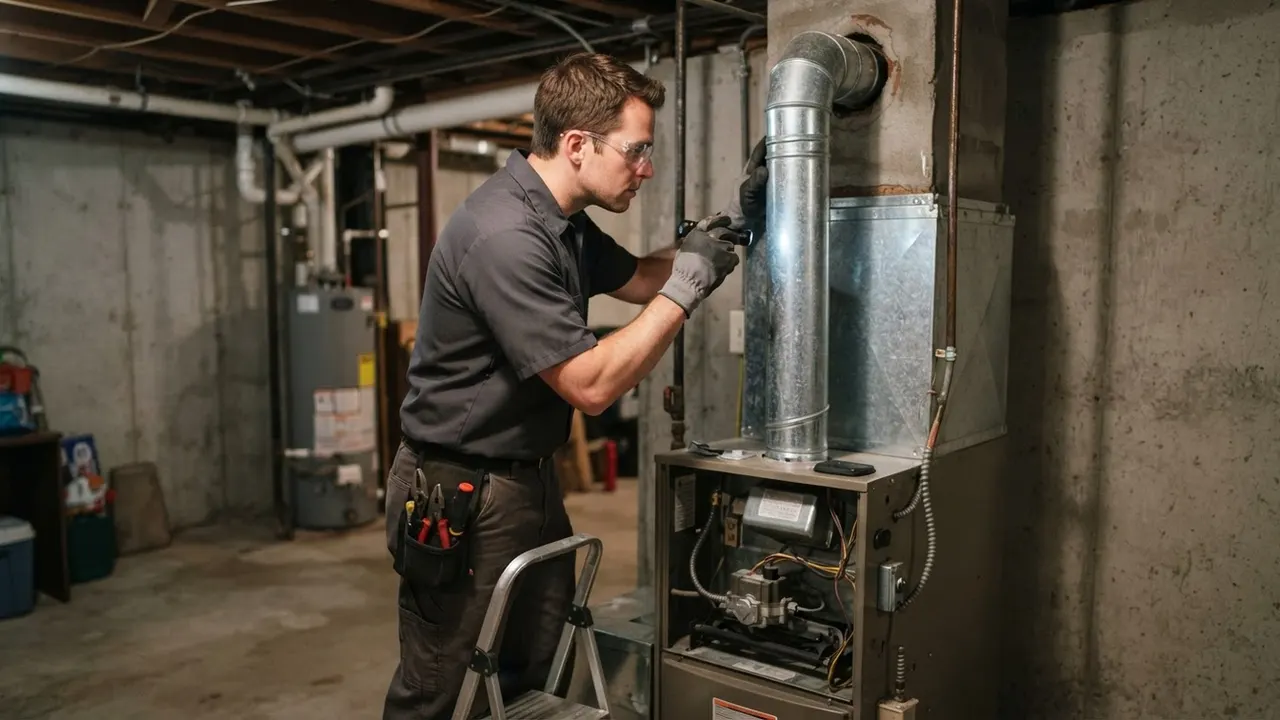
We run 24/7 furnace repair Ohio-wide, with stocked trucks routed to the closest call. That means a no-heat night in Saint Clairsville is not waiting on a crew from Cleveland, and a short-cycling furnace in Milford gets a tech who knows the local housing stock. Below are a few of the communities we cover most often.
Older homes near downtown often have original ductwork, so we check airflow and static pressure alongside the ignition sequence on every no-heat call here.
A mix of post-war ranches and newer builds. We see a lot of limit-switch trips from undersized returns, which we correct rather than just reset.
Two-story homes with long duct runs and zoned systems. Uneven heating calls here usually trace to dampers or the blower, not the furnace itself.
Lake-effect snow belt, so furnaces run hard and long. Inducer and pressure-switch failures are common, and we stock those parts for the brands we see most.
Dense older housing with gas furnaces in basements. Flue draft and venting checks are standard on every call, and we carry the igniters and sensors these systems need.
Real experiences from customers who chose our Emergency Furnace Repair services.
“Furnace died on a Sunday night in January with the house at 56 degrees. They picked up on the first ring, had a tech out in about 90 minutes, and he had a new igniter and flame sensor in the truck. Heat was back before midnight and the price was what he quoted at the door.”
Dana R.
Homeowner, Chesterland
“Our Carrier was short cycling and two other companies told us we needed a whole new system. These guys tested the board and found a failed capacitor and a restricted return. Fixed both for a fraction of a replacement quote. That was two winters ago and it is still running clean.”
Marcus T.
Homeowner, Brookville
“Called at 5 a.m. when the furnace was blowing cold air. Dispatcher was calm and walked me through checking the filter while the tech was en route. Turned out to be a dirty flame sensor. He cleaned it, tested the temperature rise, and showed me the numbers. In and out in under an hour.”
Priya S.
Homeowner, Milford
Real answers to the questions we hear most often from local homeowners and property managers.
The most common emergency call we run: the furnace runs but the air is cold. We test the ignition sequence, gas valve, and flame sensor, then fix the actual fault instead of swapping parts until something works.
View Furnace Not Heating RepairWhen a repair no longer makes sense, we install new gas and electric systems sized to your home and ductwork. Load calculation, permit, and startup are handled in one job, with the old unit hauled away.
View Furnace InstallationA cracked heat exchanger or a 20-year-old unit with a failed board usually means replacement. We quote replacement options alongside the repair so you can compare cost per year, not just today's bill.
View Furnace ReplacementAnnual maintenance is what keeps emergency calls off your calendar. We clean the flame sensor, check the igniter, test the capacitor, and verify temperature rise so small drift gets caught before it becomes a no-heat night.
View Furnace MaintenanceA tune-up covers filter change, burner cleaning, blower inspection, and a combustion check. It is the cheapest hour you will spend on your heating system, and it protects the repair warranty on parts we installed.
View Furnace Tune-UpBuying a house or coming off a hard winter? An inspection covers heat exchanger, flue, gas connections, and electrical. You get a written report with photos and a clear list of what needs attention now versus later.
View Furnace InspectionCall us any hour, any day. Our dispatchers answer live, give you a realistic arrival window, and route the closest truck to your address. If you prefer, send an email and we will reply the same business day with scheduling options.
Phone
+16149260837Address
875 Freeway Dr N, Columbus, OH 43229
Hours
Mon–Fri: 7AM – 7PM
Sat: 8AM – 4PM
Sun: Emergency Only
24/7 Emergency Available