Logo
Get Estimate

Furnace Inspection in Ohio | 24/7 Safety Inspections Keep Your Heat Safe & Running

Statewide furnace safety inspection in Ohio, done right the first time


A Furnace Inspection in Ohio is the fastest way to catch a cracked heat exchanger, a failing igniter, or a carbon monoxide leak before it becomes an emergency. We inspect gas and electric furnaces across the state, from older Cleveland-area housing stock to newer builds in Columbus suburbs. If your system is short cycling, blowing cold air, or you simply have not had it looked at in two years, book a furnace safety inspection in Ohio today.

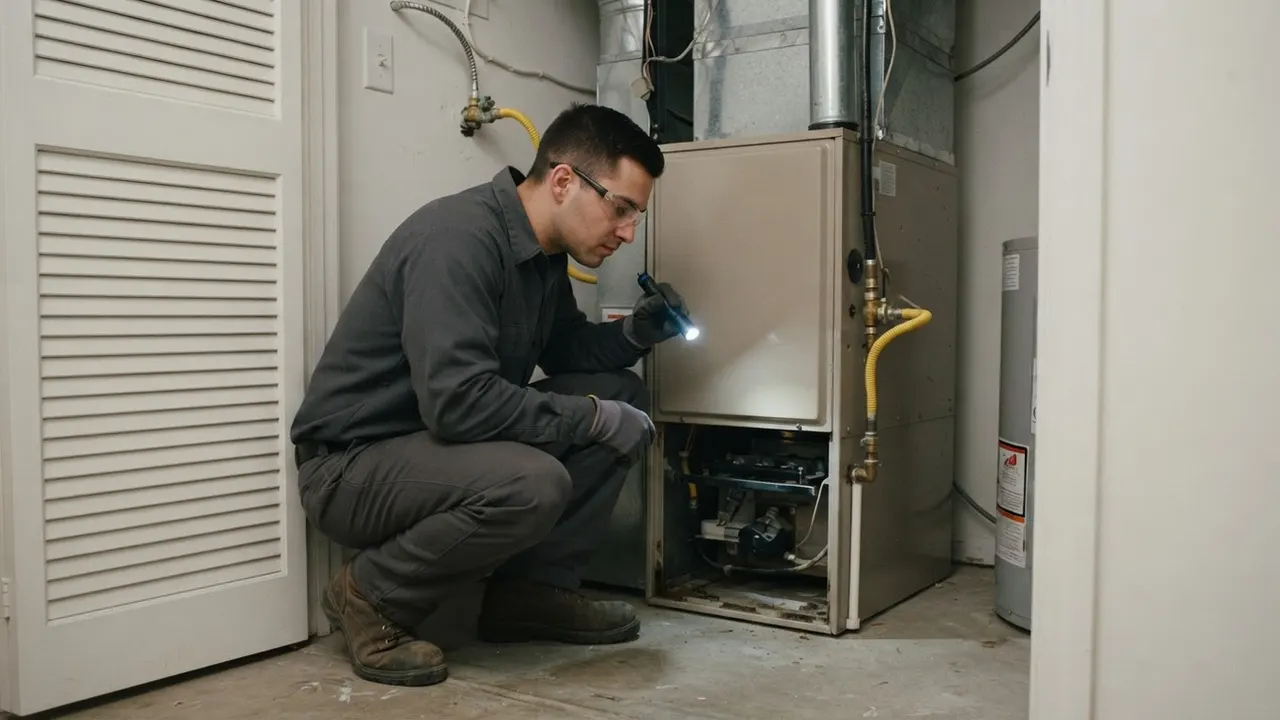
Furnace Inspection in Ohio: furnace technician performing a visual inspection of the entire furnace unit, using a flashlight
Licensed Licensed & Bonded
Fully Insured Insured & Bonded
24/7 Emergency Same-Day Response
Warranty Backed 24+ Years Trusted

What our furnace inspection includes

Every inspection covers the safety-critical components and the performance items that drive your gas bill. Here is what is included in the standard visit. Repairs and parts are quoted separately, always before we start work.

Heat exchanger inspection

We pull the burner assembly and inspect the heat exchanger with an inspection camera for cracks, rust, and soot. A cracked heat exchanger is the number one CO risk in a gas furnace. If we find one, we shut the system down and quote repair or replacement.
Combustion analysis

A combustion analyzer reads CO, CO2, and stack temperature at the flue. We compare readings to the manufacturer's spec. Anything out of range points to a gas valve issue, a dirty burner, or a venting problem. You get the numbers in your report.

Electrical and controls check

We test the capacitor, igniter, flame sensor, blower motor, and circuit board with a multimeter. Amp draw and microamp readings tell us what is about to fail. This is how we catch a furnace not turning on before it strands you in January.

Airflow and filter check

We measure static pressure across the filter and coil, check the blower wheel for buildup, and verify the filter is the right size and MERV rating. Restricted airflow causes short cycling, uneven heating, and premature blower failure.

Gas line and venting check

We pressure-test the gas connections, check the flue for proper draft and corrosion, and verify the venting meets code. A blocked flue or a back-drafting water heater can push CO into the home. We check both.

What a Furnace Inspection in Ohio actually covers


A Furnace Inspection in Ohio is a top-to-bottom safety and performance evaluation of your heating system, not a quick glance at the filter. We pull the burner assembly, inspect the heat exchanger for cracks, test the flame sensor and igniter, check the gas valve for leaks, and measure static pressure across the blower. We also run a combustion analyzer at the flue to read CO and CO2 levels. The whole visit takes 60 to 90 minutes for a standard residential furnace.

Ohio winters swing hard. A furnace that ran fine in a 45-degree November can fail when a January cold snap drops temperatures into the single digits. That is why an annual furnace inspection Ohio homeowners schedule in fall pays for itself. If you have been searching for a furnace inspection in Ohio near me, our techs cover the whole state and can usually be on-site within 24 to 48 hours of your call.

How our furnace inspection process works

We keep it simple. You call, we schedule a window, and a NATE-certified tech shows up with a fully stocked van. Here is exactly what happens from the first phone call to the final report.

01

Schedule

Call or book online — a real human picks up and confirms a 2-hour arrival window.

02

Diagnose

Licensed tech inspects on-site, then walks you through the cause and your options.

03

Fix

The job is completed to code and done right the first time — no shortcuts, no surprises.

04

Guarantee

Every job backed by a written workmanship warranty — and we stand behind it.

Tools and methods we use

Tools & Equipment

Combustion analyzer

Reads CO, CO2, and stack temperature at the flue. This is the tool that catches a cracked heat exchanger or a gas valve running out of spec. Every inspection includes a combustion test.

Inspection camera

Lets us see inside the heat exchanger and the secondary coil without pulling the whole furnace apart. Cracks and rust that are invisible from the outside show up clearly on camera.

Manifold gauge set

Used to check gas pressure at the valve and verify manifold pressure matches the manufacturer's spec. Incorrect pressure causes sooting, high CO, and poor efficiency.

Multimeter

Tests capacitors, igniters, flame sensors, and circuit boards. Amp draw and microamp readings tell us which components are about to fail before they strand you.

Duct cleaning equipment

When the inspection shows heavy dust or debris in the return, we can clean the ducts to restore airflow. Restricted airflow is a common cause of short cycling and uneven heating.

Methods & Standards

NATE-certified diagnostic protocol

Every tech follows the same step-by-step diagnostic sequence: visual, electrical, airflow, combustion, then report. NATE certification means they have passed written and hands-on testing on furnaces, not just watched a video.

Combustion analysis to manufacturer spec

We compare CO, CO2, and stack temperature readings against the furnace manufacturer's published range. If readings fall outside spec, we adjust the gas valve or clean the burners until they are back in range.

Static pressure testing

We measure static pressure across the filter and coil to confirm the blower is moving the CFM the system was designed for. High static pressure means restricted airflow, which causes short cycling and premature blower failure.

Code-correct venting verification

We check the flue for proper draft, slope, and material. A blocked or back-drafting flue can push CO into the home. We verify against current Ohio mechanical code and correct any issues before we leave.

When to schedule a furnace inspection

01

You just bought a house in Ohio and have no service records for the furnace.

What we do: We inspect the full system, document the model and serial number, and give you a baseline report with photos and combustion readings. You will know exactly what you own and what it needs.

→ You start ownership with a clear picture of the furnace's condition and a maintenance plan for the next 12 months.

02

Your furnace is 12 to 15 years old and you want to know whether to repair or replace it.

What we do: We inspect the heat exchanger, blower, and controls, then compare repair cost against replacement cost. If the exchanger is cracked, we tell you straight. If it is sound, we quote the repair.

→ You make a decision based on readings and photos, not a sales pitch. No pressure either way.

03

You are selling your home and the buyer's inspector flagged the furnace.

What we do: We do a full inspection, document the findings, and quote any needed repairs. If the furnace is fine, our written report gives the buyer confidence. If it needs work, we can usually complete it before closing.

→ The sale moves forward with a documented furnace condition and no last-minute surprises.

04

Your carbon monoxide detector went off and you want the furnace checked.

What we do: We treat CO calls as priority. A tech runs a combustion analyzer at the flue and a CO monitor in the supply air. If the heat exchanger is cracked or the burners are running rich, we shut the system down and quote the fix.

→ You know whether the furnace is the source and what it takes to make it safe. We do not leave a CO issue unresolved.

How Furnace Inspection works in Ohio

Neighborhoods We Serve

  • Canal Fulton

    Mix of older river-adjacent homes and newer builds. We see a lot of 1990s furnaces with original blowers. Inspections here often catch worn blower bearings before they seize.

  • Rittman

    Smaller housing stock with many propane and natural gas furnaces. We check gas pressure carefully because propane conversions often run at the wrong manifold pressure.

  • Huron

    Lake Erie humidity means more condensate issues in high-efficiency furnaces. We check the condensate trap and drain line on every inspection here.

  • Hubbard

    Older mill-town housing with many 1970s and 1980s furnaces. Heat exchanger cracks are common. We use the inspection camera on every unit over 15 years old.

Local Conditions We Plan For

  • Single-digit January cold snaps

    Furnaces run continuously for days, which exposes weak capacitors and worn blower bearings. An inspection in fall catches these before the cold arrives.

  • Lake Erie humidity and lake-effect snow

    High-efficiency furnaces produce more condensate, and the drain lines freeze or clog. We check the trap, drain pitch, and flue termination on every inspection near the lake.

  • Older housing stock with original ductwork

    Undersized or leaky ducts raise static pressure and cause short cycling. We measure static pressure and recommend duct sealant or duct cleaning when readings are high.

Cracked heat exchanger caught in Rittman

Before

A 1998 Lennox furnace in Rittman was short cycling and the homeowner's CO detector had gone off twice. A previous company had cleaned the flame sensor and called it good. CO readings at the flue were 180 ppm.

After

Our inspection camera found a 3-inch crack in the heat exchanger. We shut the system down and quoted a replacement. The new Carrier unit was installed the next day. Post-install CO readings were 12 ppm at the flue.

Maintenance: Annual inspection every fall, plus a CO detector on every level of the home. The homeowner now books the inspection in September before the heating season starts.

Before

A Huron homeowner called because the furnace was short cycling every four minutes and the house would not get above 65 degrees. The furnace was a 2012 Trane high-efficiency unit with a clogged condensate trap.

After

We cleared the condensate line, replaced a weak capacitor, and cleaned the flame sensor. Static pressure dropped from 0.9 to 0.5 inches of water column. The furnace ran a full 15-minute cycle and held 70 degrees.

Maintenance: We recommended a filter change every 60 days and an annual tune-up. The homeowner also added a condensate pump safety switch to prevent future water damage.

Before

A property manager in Hubbard booked inspections on six rental units. One 1985 Goodman furnace smelled faintly of gas. The tenant had not reported it. Our combustible gas detector flagged a leak at the gas valve inlet.

After

We shut off the gas, replaced the gas valve, and pressure-tested the line. The other five units passed inspection with minor tune-up items. The property manager avoided a potential emergency call and a liability issue.

Maintenance: All six units are now on an annual September inspection schedule. The property manager gets a written report per unit and a reminder before the next season.

Furnace problems our Ohio inspections catch

Most furnace failures give warning signs weeks before they quit. A furnace inspection in Ohio catches those signs while they are still cheap to fix. Here are the problems we see most often.

Problem

Furnace short cycling every few minutes

Short cycling wears out the igniter, inducer, and blower. It also spikes your gas bill and leaves rooms cold. Left alone, it usually ends in a no-heat call on the coldest night of the year.

Our Fix

We test the flame sensor, check the thermostat anticipator setting, and measure static pressure. Most short cycling traces back to a dirty flame sensor, an oversized furnace, or a restricted return. We clean or replace the sensor and correct the airflow.

Problem

Furnace blowing cold air

Cold air from the vents in winter usually means the burners are not lighting or the blower is running without heat. It can also mean a failed limit switch is locking the system out.

Our Fix

Our techs test the igniter, gas valve, and limit switch with a multimeter. A failed igniter or a gas valve out of spec shows up immediately. We carry common igniters and gas valves for Carrier, Trane, Lennox, Goodman, and Rheem on the van.

Problem

Furnace making loud noises

Banging, rumbling, or screeching from the furnace points to a delayed ignition, a failing blower bearing, or a cracked heat exchanger. Delayed ignition can crack the exchanger over time.

Our Fix

We inspect the burners for alignment, check the blower bearings, and run a combustion test. If the noise is delayed ignition, we clean the burners and set the manifold pressure. If it is a bearing, we quote a blower replacement.

Problem

Furnace leaking water

Water around a high-efficiency furnace is usually a clogged condensate line or a cracked condensate trap. If ignored, it can rust the cabinet and short the circuit board.

Our Fix

We clear the condensate line, check the trap and drain pan, and verify the flue is pitched correctly. If the circuit board shows water damage, we test it and quote a replacement. Most condensate issues are fixed in one visit.

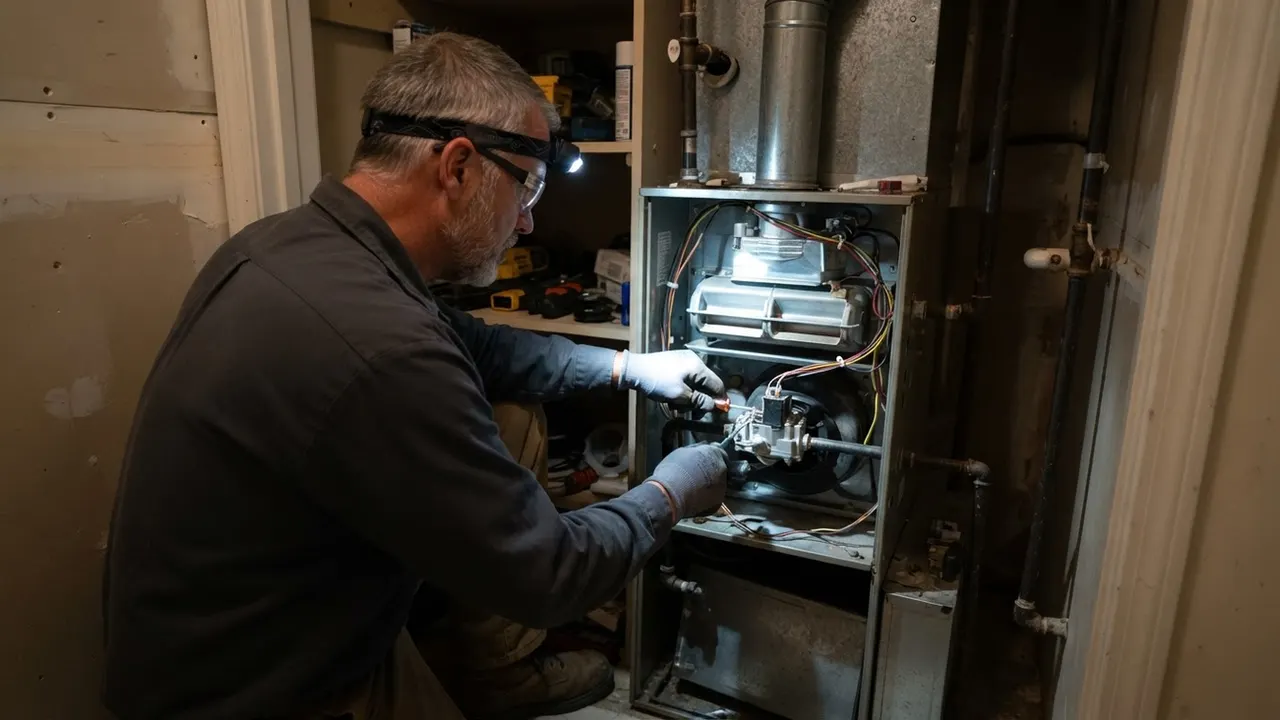
Furnace Repair in Ohio: close-up view of a furnace technician's headlamp illuminating the internal workings of a furnace

Why Ohio homeowners book an annual inspection

A furnace that passes inspection runs cheaper, lasts longer, and will not put your family at risk. Here is what you actually get when you schedule a heating system inspection Ohio homeowners trust.

  • Catch CO leaks early

    A cracked heat exchanger can push carbon monoxide into your living space with no smell and no warning. Our combustion analyzer reads CO in parts per million at the flue and in the supply air. If we find a leak, we shut the system down and walk you through repair or replacement options the same day.

  • Lower your gas bill

    A dirty blower wheel, a clogged filter, or a burner running rich can add 10 to 25 percent to your monthly gas bill. During a furnace inspection and tune up Ohio customers get a clean burn, correct manifold pressure, and a blower that moves air the way the manufacturer intended. Most homeowners see the difference by the second billing cycle.

  • Extend furnace lifespan

    A well-maintained furnace lasts 15 to 20 years. One that runs with a failing capacitor, a worn blower bearing, or a dirty flame sensor often quits at 10 or 12. An annual furnace inspection Ohio homeowners keep on schedule is the cheapest insurance you can buy against a mid-winter replacement.

  • Avoid emergency calls

    The worst time to find out your furnace will not turn on is 2 a.m. on a 12-degree night. An inspection in September or October catches the igniter that is about to fail and the inducer motor that is drawing too many amps. You fix it on your schedule, not during a cold snap.

Licensed, certified, and reviewed

Licensed & Certified

  • NATE Certification — issued by North American Technician Excellence
  • EPA Section 608 Certification — issued by U.S. Environmental Protection Agency
  • OSHA Safety Certification — issued by Occupational Safety and Health Administration
  • State HVAC License — issued by State of Ohio

Verified Reviews

Google ★★★★★4.9

Emergency Furnace Repair inspected our furnace in Canal Fulton last October. The tech found a cracked heat exchanger and showed us the camera footage. We had no idea. New furnace installed the next day. Professional from start to finish.

Yelp ★★★★★4.8

Called for a furnace inspection in Huron because our system was short cycling. Tech diagnosed a bad capacitor and a clogged condensate line in under an hour. Fair price, no upsell. The written report was detailed.

BBB ★★★★★4.9

We use Emergency Furnace Repair for annual inspections on six rental units in Hubbard. They are on time, thorough, and send a report per unit. Found a gas leak last year that could have been serious. Highly recommend.

What Ohio homeowners say

Real experiences from customers who chose our Furnace Inspection services.

“Had Emergency Furnace Repair out for an inspection in October. The tech found a cracked heat exchanger my old company missed two years in a row. CO readings were high. He shut the furnace down, showed me the photos, and quoted a replacement. New Carrier unit was in the next day. Straight shooters.”

D

Dave R.

Homeowner, Canal Fulton

“Our furnace was short cycling and blowing cold air. The inspection found a bad capacitor and a dirty flame sensor. Tech had both on the van and fixed it in under an hour. The written report with static pressure readings was a nice touch. Will use them every fall.”

M

Melissa T.

Homeowner, Huron

“I manage six rental units in Hubbard and Canfield. Emergency Furnace Repair inspects all of them every September. They send one tech, knock them out in a day, and email me a report per unit. Found a gas valve leak in one last year that could have been bad. Worth every dollar.”

G

Greg P.

Property Manager, Hubbard

Furnace inspection questions Ohio homeowners ask

Real answers to the questions we hear most often from local homeowners and property managers.

How much does a furnace inspection cost in Ohio?
Most furnace inspections in Ohio run $99 to $249 in 2026, depending on whether you bundle a tune-up and how many systems are on the property. A standalone safety inspection with combustion analysis sits at the lower end. If we find a repair, we quote it before we start. Many homeowners pair the inspection with a furnace tune-up Ohio service for a bundled rate.
How often should a furnace be inspected in Ohio?
Once a year, ideally in early fall before the first cold snap. Manufacturers require annual inspection to keep the warranty valid, and Ohio's temperature swings make fall the right window. If your furnace is older than 12 years or you have had repair issues, a second look in spring is cheap insurance.
What does a furnace inspection include in Ohio?
A full inspection covers the heat exchanger, burners, flame sensor, igniter, gas valve, flue and venting, blower motor, capacitor, filters, and thermostat. We run a combustion analyzer to read CO and CO2, check static pressure, and test amp draw on the blower. You get a written report with photos and readings.
Can a furnace inspection detect carbon monoxide in Ohio?
Yes. We use a combustion analyzer at the flue and a handheld CO monitor in the supply air. If the heat exchanger is cracked or the burners are running rich, CO readings spike and we catch it. Anything above 100 ppm at the flue gets the system shut down until it is repaired. That is the whole point of a furnace safety inspection Ohio homeowners schedule every fall.

Related services we offer

Furnace Not Heating Repair

If your furnace is not heating, the inspection usually finds the cause: a failed igniter, a bad flame sensor, or a gas valve out of spec. We diagnose and repair on the same visit whenever the part is on the van.

View Furnace Not Heating Repair

Emergency Furnace Repair

When your furnace quits at 2 a.m. and the house is dropping below 60 degrees, our 24/7 emergency techs roll out. We carry common parts for Carrier, Trane, Lennox, Goodman, and Rheem so most repairs are done in one trip.

View Emergency Furnace Repair

Furnace Installation

If the inspection finds a cracked heat exchanger or a system past 18 years, we quote a new install with load calculation, permits, and code-correct venting. We install Carrier, Trane, Lennox, Goodman, Rheem, York, Bryant, American Standard, Mitsubishi Electric, and Daikin.

View Furnace Installation

Furnace Replacement

A furnace replacement is the right call when repair costs pass half the price of a new unit. We handle removal, disposal, new line set or flue work, and startup. Most replacements are done in one day with a 5-year workmanship warranty.

View Furnace Replacement

Furnace Maintenance

Maintenance is the annual plan that keeps your furnace running between inspections. We clean the blower, check the capacitor, replace filters, and log readings so we can spot trends before they become breakdowns.

View Furnace Maintenance

Furnace Tune-Up

A tune-up pairs perfectly with an inspection. We clean the burners, adjust manifold pressure, tighten electrical connections, and verify airflow. Most tune-ups take 60 to 90 minutes and drop your gas usage noticeably.

View Furnace Tune-Up

Book your Furnace Inspection in Ohio today

Do not wait for the first cold snap to find out your furnace has a problem. Call Emergency Furnace Repair at +1 (614) 926-0837 and schedule a furnace safety inspection in Ohio. We are licensed, insured, and available 24/7 for emergencies.

Call Now Schedule Inspection

Contact Our Ohio Team

Call us any hour, any day. Our dispatchers answer live, give you a realistic arrival window, and route the closest truck to your address. If you prefer, send an email and we will reply the same business day with scheduling options.

Or call us right now at +16149260837 — we answer.

Emergency Furnace Repair


  • Phone

    +16149260837
  • Address

    875 Freeway Dr N, Columbus, OH 43229

  • Hours

    Mon–Fri: 7AM – 7PM
    Sat: 8AM – 4PM
    Sun: Emergency Only
    24/7 Emergency Available

Call +16149260837 Get Quote
Call Quote